September 25, 2026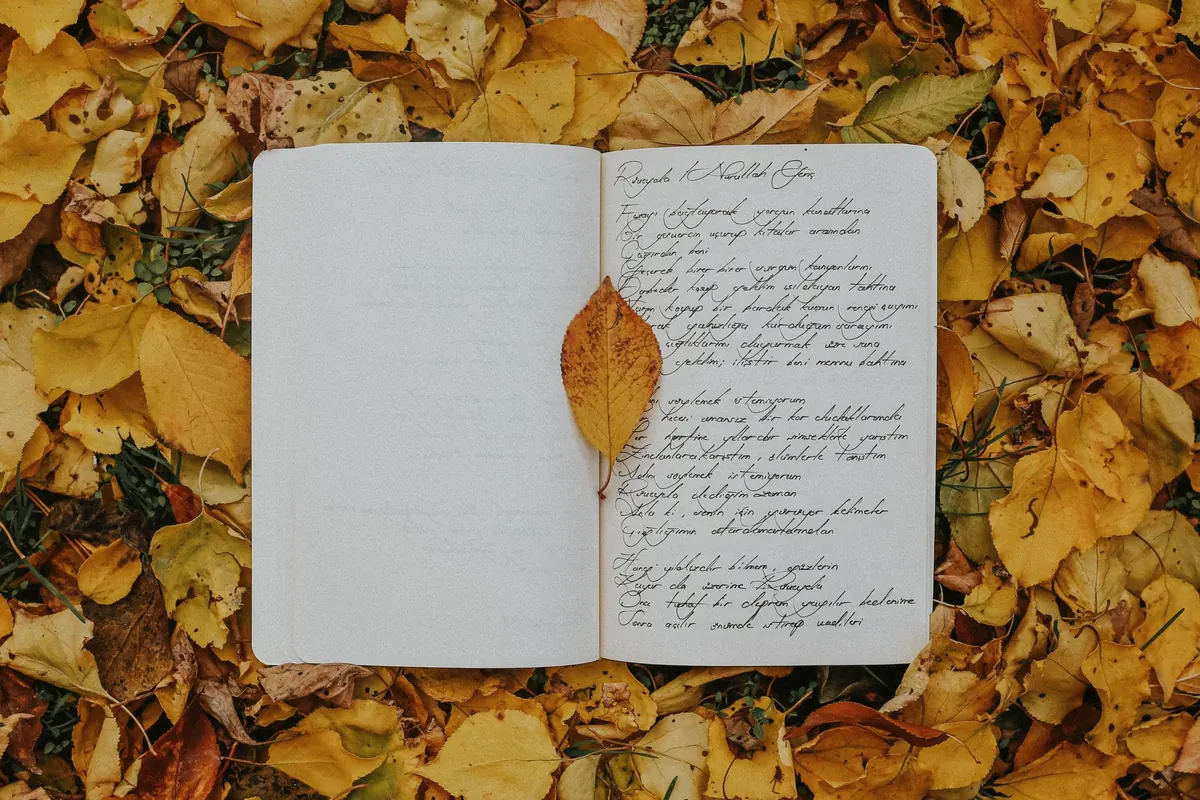
Rain on the window, a lamp switched on earlier than feels decent, and half an hour with a notebook: that is the whole appeal of autumn journalling. The season does much of the work for you. It hands over colour, cold hands, wet pavements, the smell of somebody else's woodsmoke, and evenings long enough to fill with something quiet. The prompts below are written for exactly those days — the ones where you are indoors, the kettle is on, and you want to write something truer than a shopping list.
Why Autumn Suits a Notebook
Summer is generous but distracting. Autumn narrows things down, and there is more to notice because more is changing: the light, the temperature, the trees, the hour you draw the curtains.
You don't have to write about the season in a grand way. Borrow from it instead — one detail from a walk, the mug in your hands, the mood of a dark afternoon. A prompt earns its place because it replaces the blank-page question ("what should I write about?") with something small enough to answer honestly.
There is also something quietly useful about putting words on paper when the days shorten. Autumn can feel like a slow inhale before winter: cosy, but also reflective, sometimes a little melancholy. A notebook gives that feeling somewhere to go. It doesn't need to be profound. A page about the first time you needed gloves is as valid as a page about grief, and often the small entry opens the door to the larger one.
Get Cosy Before You Write
No study, desk or view of a wood is required. A kitchen table with a lamp behind your shoulder is plenty. A few small preparations make the difference between writing for ten minutes and writing for an hour.
- Light: one warm lamp rather than the overhead light. Rain looks better by lamplight, and you will stay longer.
- Paper: a notebook that lies flat, so you are not fighting the spine. Cheap paper is fine; the point is to fill it.
- Warmth: a blanket over your knees, thick socks, a jumper with sleeves you can push up.
- Drink: something you hold with both hands. Tea, coffee, hot chocolate, or hot blackcurrant if you want to feel nine years old again.
- Sound: rain on the glass, or a radio at low volume. Music with words will steal your sentences.
Then put your phone in another room and set a timer for twenty minutes. You can always keep going when it rings. If you live with other people, tell them you are having twenty quiet minutes; a closed door and a full mug are a decent do-not-disturb sign. If the room is chilly, fill a hot water bottle and put it on your lap. Comfort is not an indulgence here — it is what stops you from editing yourself too quickly and closing the notebook after three lines.
25 Prompts for Rainy Days
Treat these as starting points rather than homework. If one prompt gives you a single good paragraph, it has done its job. Skip whatever doesn't fit and come back to it in November. You can also use the same prompt twice and get two different answers; that is not cheating, it is just weather and mood doing their work.
On Autumn Walks
- Write about the moment you first noticed the season had turned: one tree, one smell, the first morning you needed a coat.
- Walk a route you know by heart and note five things that have changed since August.
- Describe a leaf, conker or acorn you brought home. Where did you pick it up, and what made you keep it?
- What does your street smell like in October? Wet leaves, bonfires, somebody's dinner.
- Catalogue the sounds of a wet walk — rain on a hood, tyres through puddles, gravel, a dog shaking itself dry.
- Which spot near you is at its best in autumn? Describe it as though writing directions for a friend.
- Write a short letter to the person you will be the next time you walk this route.
Warm Drinks and Small Comforts
- Describe the first hot drink of the day. Where are you sitting, what can you see, and what does the mug feel like in your hands?
- What is your ideal rainy-day breakfast? Write it as a scene, not a shopping list.
- Write about a comfort you have outgrown and one you have grown into.
- List five small things that make your home feel like autumn: a candle, a blanket, a particular mug, the heating clicking on.
- Describe the jumper, blanket or pair of socks you reach for most when it rains. How did you come to own it?
- Write about a meal that tastes like this season to you — soup, crumble, jacket potato, something someone else made.
Rainy Day Rituals
- What does a perfect rainy Sunday look like, hour by hour?
- Write about a film, book or album you return to when the weather turns. What does it give you?
- Describe the sound of rain in three different places: on a window, on a tent, on a car roof, on leaves.
- If you could design a rainy-day menu for one person, what would be on it?
- Write a list of things to do when the internet goes down and you are stuck indoors.
- What is the most comforting thing you own? Describe it without naming it, then name it at the end.
Looking Inward
- What are you ready to let go of before winter?
- Write about a change you can feel coming, even if you cannot explain it yet.
- What does rest mean to you at the moment? When did you last properly rest?
- Describe a recent moment when you felt unexpectedly content. Stay with it for a full page.
- Write a letter to your summer self. What would you tell them about what is coming?
- What would you like to have made, learned or finished by the end of the year?
How to Use a Prompt When You Feel Stuck
Some prompts will land; others won't. If you sit down and nothing comes, don't decide you are bad at journalling. Try one of these small moves instead.
- Set a timer for ten minutes. Short enough that you can't talk yourself out of it, long enough to get past the first boring sentence.
- Start with a detail. Not "autumn makes me sad" but "the bin bags are blowing down the street like dark ghosts." Detail is a door.
- Write badly on purpose. Give yourself permission to produce something dull. You can always write "this is dull" and keep going.
- Change the form. If a prompt feels too big, turn it into a list, a text message, a recipe, a weather report, or a letter you never send.
I don't know what to write about the rain, so I will write about the way the window looks like it is crying, and the fact that I have not put the bin out.
Photo: betül nur akyürek / Pexels